Chemical Vapour Deposition
Chemical Vapor Deposition (CVD) is a bottom-up nanomaterial synthesis process in which volatile gaseous precursors react or decompose on a heated substrate surface to form a solid material deposit with controlled thickness and composition. It is widely used for high-purity films and nanostructures.
Chemical Vapor Deposition (CVD) is a chemical process is a whereby a thin solid film is deposited onto a substrate through chemical reactions of the gaseous species. For structural component applications, the deposition typically takes place at a temperature of around 1000oC.
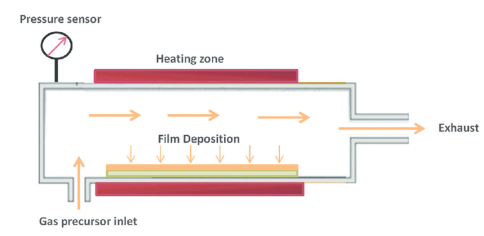
Figure 1. Chemical vapour deposition method
Figure 1 gives a typical example of a CVD system, where reactant gases, normally called precursor gases of CH3SiCl3 and H2, are delivered into a reaction chamber at a suitably determined temperature. As they pass through the reactor these gases come into contact with a heated substrate; they then react and form a solid SiC layer deposited onto the surface of a substrate. Usually, an inert gas, such as Ar, is used as a diluent gas. The depositing temperature and pressure are the critical parameters in this process. After the reactions, the exhaust gases containing HCl species are trapped by NaOH and then condensed by liquid N2 trap before being released into the atmosphere.
Advantages
- Versatile- any element or compound can be deposited
- High purity can be obtained
- High density – nearly 100% of the theoretical value
- Economical in production, since many parts can be coated at the same time
Disadvantages
- High deposition temperatures (usually greater than 600oc)
- Restrictions on the kind of substrates that can be coated.
- Chances of contamination is more
- Chemical and safety hazards caused by the use of toxic, corrosive, explosive precursor.
Types of CVD Techniques
Atmospheric Pressure CVD (APCVD)
Depositions that occur at atmospheric pressure; easy to operate but may suffer from lower film purity compared to reduced-pressure techniques. :contentReference[oaicite:3]{index=3}
Low Pressure CVD (LPCVD)
Performed at low pressures to reduce unwanted gas-phase reactions and improve uniformity and purity. :contentReference[oaicite:4]{index=4}
Plasma-Enhanced CVD (PECVD)
Uses plasma to activate chemical reactions at lower temperatures than conventional CVD, enhancing film quality with reduced thermal budget. :contentReference[oaicite:5]{index=5}
Metal-Organic CVD (MOCVD)
Involves metal-organic precursors to deposit compound semiconductors and complex materials with precise composition control. :contentReference[oaicite:6]{index=6}
Conclusion
Chemical Vapor Deposition (CVD) is a cornerstone bottom-up nanomaterial synthesis technique. Its ability to produce uniform, high-quality nanostructures with controlled composition makes it indispensable in nanotechnology, microelectronics, and advanced materials science. :contentReference[oaicite:18]{index=18}
Related topics: Synthesis of Nanomaterials | Introduction to Nanotechnology | Quanrum Confinement